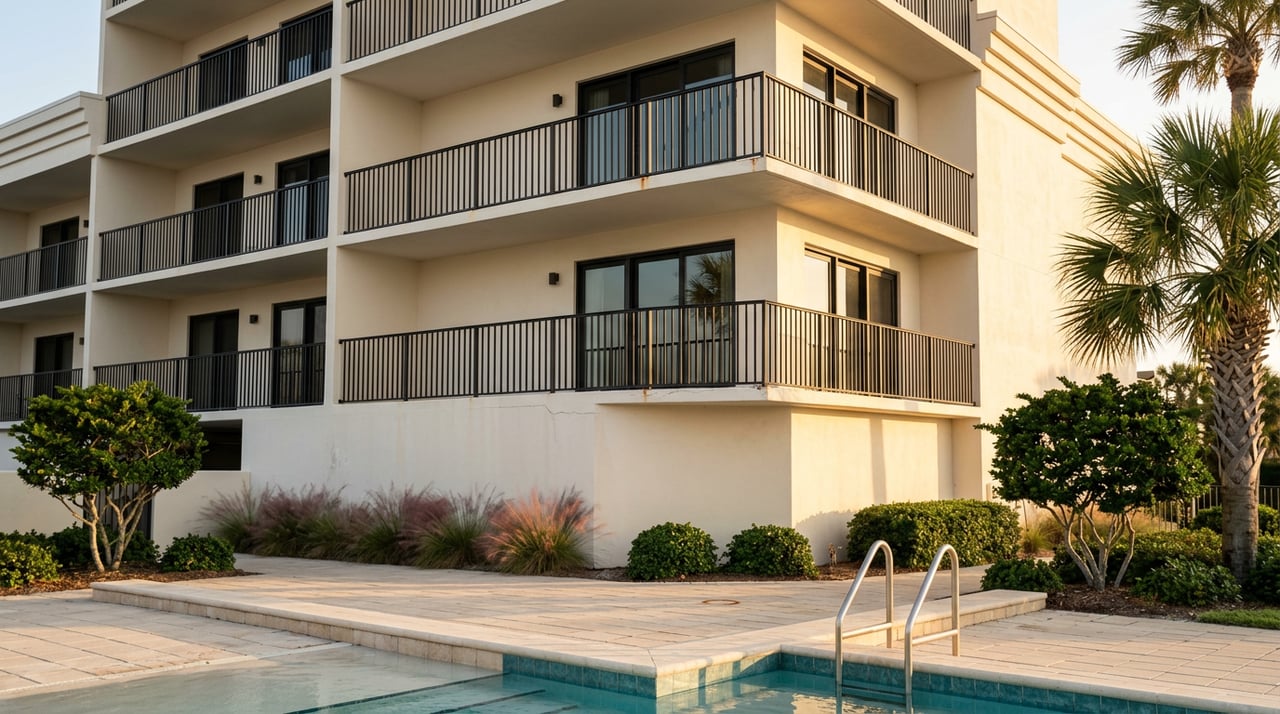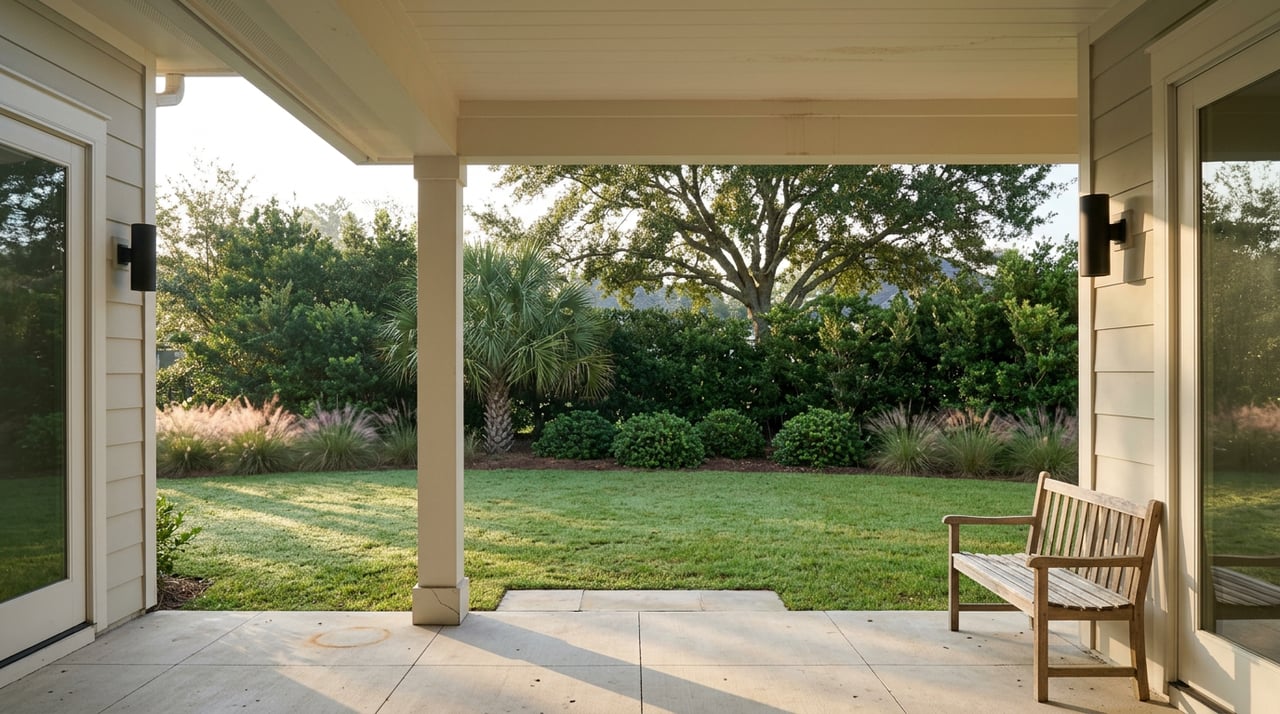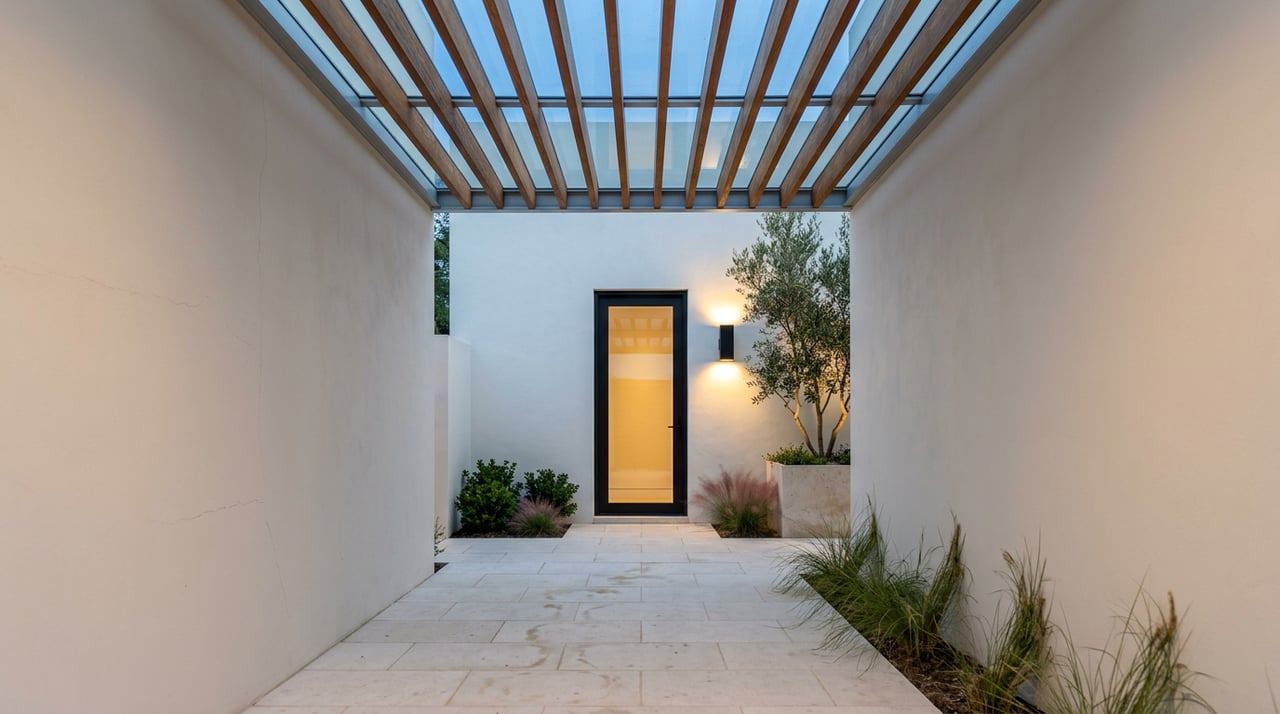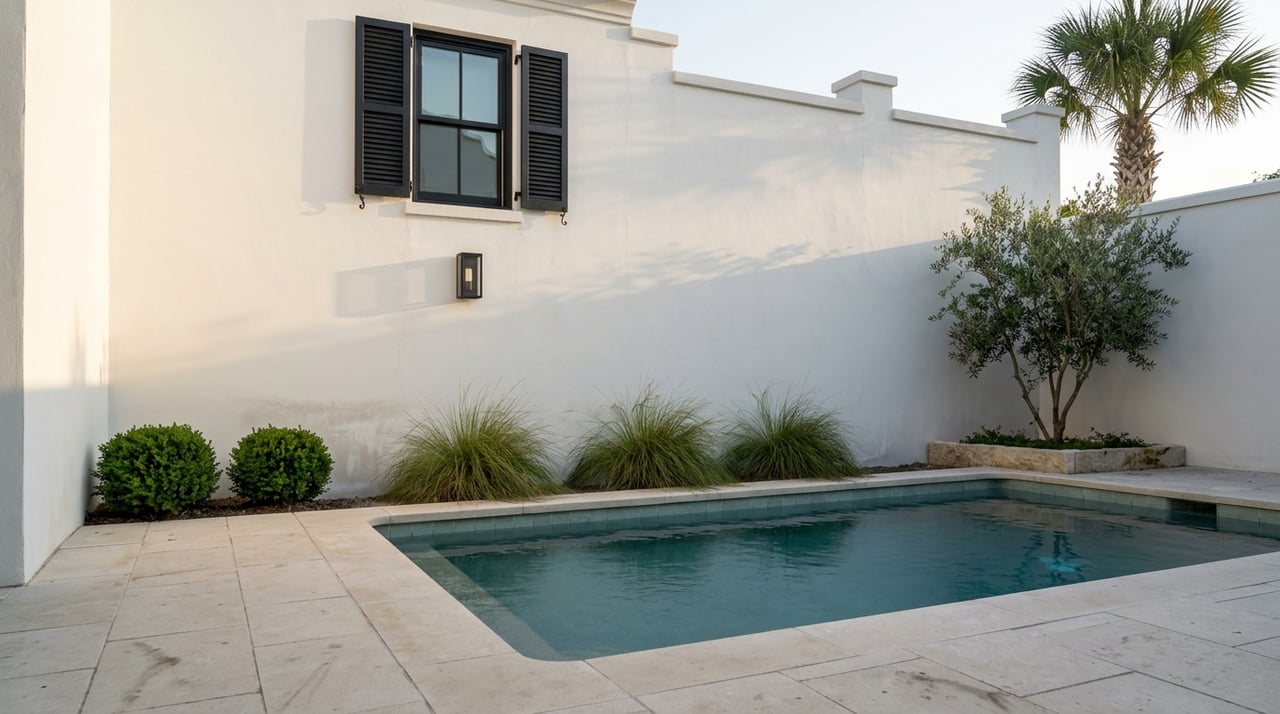
Say you close on a resale courtyard home in Alys Beach in early fall. You want to swap the exterior sconces, add a shade tree to the courtyard, and repaint a trim detail before a holiday gathering. In most Walton County neighborhoods, that's a three-week job: pull a permit, hire a contractor, done. In Alys Beach, three weeks doesn't cover the first phase of review, let alone approval.
That gap between what buyers expect and what the town actually requires is where most of the frustration around Alys Beach construction and renovation starts. Most guides to the community treat the Architectural Review Board as an inconvenience to budget around, a tax on taste you pay for the privilege of living somewhere this consistent. That framing misses the more useful fact: the review process is not primarily about aesthetics. It is the mechanism that keeps Alys Beach insurable in a state where coastal carriers are pulling back, and understanding it that way changes how you should plan a project here from day one.
What the review board is actually checking
Alys Beach's Town Architects, Marieanne Khoury-Vogt and Erik Vogt of Khoury Vogt Architects, oversee a private Design and Urban Code layered on top of standard Walton County permitting. The board reviews massing, roof form, exterior materials, windows and doors, landscaping, and lighting. Interior work generally does not require approval unless it changes what's visible from the street or a public space.
That sounds like conventional HOA architectural control until you look at what the code is actually locking in. Every structure in Alys Beach is required to meet the IBHS Fortified for Safer Living standard, the first community in the world to make that mandatory. Homes are built with reinforced masonry walls, concrete tile roofs, and impact-rated glazing engineered to resist wind loads roughly 25 miles per hour above the ASCE minimum, a design standard equivalent to a Category 5 hurricane. When the review board checks a proposed exterior change against the code, it isn't just protecting a streetscape. It's confirming the change doesn't compromise the construction standard the entire town's insurance profile depends on.
The Urban Land Institute's resilience case study on Alys Beach makes this connection explicit: the town's development team credits the Fortified standard with helping justify the per-square-foot pricing the community commands, and with securing lower insurance premiums for owners in a market where that's increasingly rare. The architectural review process is how that standard gets enforced project by project, years after the original construction crews left.
The timeline, and why it's shaped the way it is
Budget realistically and the process is manageable. Budget the way you would for an ordinary HOA and you'll miss a season.
| Review Stage | Typical Duration |
|---|---|
| Conceptual ARB comments | 2 to 4 weeks |
| First board review, after a complete submittal | 2 to 6 weeks |
| Revisions and final approval | 2 to 8 weeks |
| Total for a minor exterior modification | 30 to 60 days |
| Total for a major structural change or new build design | 90 to 120 days |
Add time if your lot sits in a coastal construction or flood-regulated zone, since those approvals stack on top of the ARB's own review cycle. For new construction, Fortified compliance also requires prescribed checkpoint reviews during the build in addition to whatever Walton County's building official requires, plus a final as-built certification from the structural engineer of record before the town signs off.
The most common source of delay isn't the board being slow. It's incomplete submittals, design elements that conflict with the code, or a design and permitting team unfamiliar with how Alys Beach's process interacts with county requirements. A design team with real Alys Beach experience routinely moves through review faster than one learning the code for the first time, which is worth weighing against any temptation to save money on an out-of-town architect.
Two paths through the same code
For a full custom build, you're working through the complete review sequence: architect selection from a firm familiar with the code, conceptual review, formal submittal, and staged approvals, all coordinated with an approved builder. The town's own construction arm, Alys Beach Construction, works alongside roughly eight to ten outside approved builders qualified in the reinforced masonry techniques the code requires.
The town has also built a second path for buyers who want more speed with less design risk. The Somerset Custom Home Program pairs pre-developed architectural plans with Alys Beach Construction and a curated finish selection, compressing the review timeline by starting from a design the board has already vetted. It exists because full custom review, while thorough, is not fast, and the town recognized that some buyers want the character of a custom home without absorbing the entire review cycle. If your timeline matters more than total design freedom, it's worth asking about Somerset availability before committing to a fully custom homesite.
What this means if you're buying a resale
If your plan is to buy an existing home and update it, the ARB history of that property becomes part of your due diligence, not an afterthought. Approvals sometimes transfer with the property. Others expire or are tied to a specific construction stage, and starting exterior work without current approval can trigger a stop-work notice, a lien, or complications with title and lending down the road.
Before you go under contract on a home you plan to modify, request the prior ARB approvals, the as-built plans, and an association letter confirming there are no outstanding violations. If a previous owner started work without full sign-off, that liability doesn't disappear at closing. It becomes yours to resolve.
A note on the numbers you'll see quoted elsewhere
If you've read a few guides on what it costs to own in Alys Beach, you've probably noticed the entry fees don't quite agree. Recent market write-ups this year have quoted the one-time capital contribution anywhere from $30,000 to $50,000, and quarterly HOA dues somewhere between roughly $3,100 and $3,560. Both ranges are recent, and both can't be exactly right for every parcel at every point in the build-out.
That inconsistency is itself a useful signal. Alys Beach is a private, master-planned town still filling in, with the community estimated at roughly 65 percent built out and full build-out projected sometime between 2029 and 2031. Fee schedules and dues get updated as the town's budget and amenity set evolve, most recently with the addition of the Silva Pool and Restaurant amenity. The number that matters is whatever appears in the current HOA budget and estoppel letter for the specific parcel you're considering, not a figure from any single guide, including this one. Treat published ranges as a planning baseline and confirm the real number before you write an offer.
Frequently asked questions
Do I need ARB approval for interior renovations? Generally no. The board's authority covers exteriors and elements visible from the street or public spaces. A kitchen remodel that doesn't touch windows, doors, or the building envelope typically stays outside the review process.
What happens if I start exterior work without approval? The town can issue a stop-work notice, and unresolved violations can lead to fines or lien rights against the property. It can also complicate financing, title, and your ability to sell later, since a buyer's due diligence will likely surface any unpermitted or unapproved work.
If I buy a resale, does the previous owner's ARB approval transfer to me? Sometimes, but not automatically. Some approvals are tied to a specific construction stage or expire after a set period. Confirm the status in writing before you close, and request the underlying approvals and as-built documentation as part of your contract.
Working through it with someone who's done it before
Alys Beach rewards patience and punishes assumptions borrowed from other neighborhoods. Whether you're weighing a resale that needs exterior updates, a homesite build, or the Somerset program, the difference between a smooth close and a stalled project usually comes down to knowing which questions to ask before you're under contract, not after.
The Polakoff Group works this corridor daily, from Alys Beach's design code to the new construction opportunities coming through it. If you're evaluating a purchase here, start with our buyer resources or reach out directly to request a White-Glove Consultation before you make an offer.