Scroll far enough through condo listings along Scenic Gulf Drive and Grand Sandestin Boulevard and you'll eventually hit a line that doesn't show up in the photo carousel or the amenity bullets. On a recent Grand Sandestin listing advertising pools, a marina, golf, Baytowne Wharf dining and access to the Solstice Club, the disclosure buried near the bottom read simply that the seller would pay the remaining special assessment. No dollar figure attached to the headline price. No mention on the flyer. Just a sentence confirming that somewhere in that building's budget, a bill had come due, and someone had to decide who was paying it.
That sentence is doing more work than the list price. In a corridor where condominiums make up a much larger share of the market than in the single-family neighborhoods elsewhere on 30A, what a building's association has or hasn't funded now shapes your real monthly cost more than the number on the offer sheet does.
What Changed on January 1
For decades, Florida condo associations had a legal escape hatch. Owners could vote every year to waive or shrink how much money the association set aside for structural reserves, the funds meant to cover roofs, load-bearing walls, plumbing, electrical systems, and waterproofing before those things fail. Keeping that vote alive kept monthly dues low, which kept units easy to sell. After the Surfside collapse, the legislature closed the hatch. Senate Bill 4-D, refined a year later by SB 154, requires condo and cooperative buildings three stories or taller to complete a Structural Integrity Reserve Study and fund it in full for eight categories of structural components: roof, load-bearing walls and primary structural members, fire protection systems, plumbing, electrical systems, waterproofing, windows and exterior doors, and any other item carrying a deferred maintenance or replacement cost above $10,000.
Associations could still waive those reserves for one more budget cycle if the budget was adopted before the end of 2024. For every budget adopted since, the waiver option is gone, and full funding became mandatory starting January 1, 2026. House Bill 1021 added its own layer that same year, requiring associations with 25 or more units to post governing documents, budgets, and reserve studies somewhere owners and prospective buyers can actually find them.
The Bill Nobody Budgeted For
Buildings that kept dues artificially low for years are now catching up all at once. Fee increases of 30 to 100 percent or more have shown up in affected associations, and special assessments in Florida condo towers have ranged from $10,000 to well over $100,000 per unit, with some running past $200,000 depending on the scope of repair. Insurance is compounding the shock. A well-run association's master policy used to consume something like 15 to 20 percent of the operating budget. In a building working through a reserve shortfall today, insurance alone can eat 40 to 60 percent of the total.
A monthly fee under $500 isn't proof a building is affordable. Sometimes it's proof the association hasn't finished paying for the last decade yet.
Same Price, Two Very Different Bills
Picture two condos in the same price bracket in Miramar Beach, same square footage, same Gulf view, listed within a few thousand dollars of each other.
| Unit at Building A | Unit at Building B | |
|---|---|---|
| Purchase price | $595,000 | $595,000 |
| Current HOA fee | $410/month | $780/month |
| Reserve funding status | Under 50 percent funded, mid catch-up | Fully funded |
| Special assessment on the table | Yes, amount not yet finalized | None pending |
| Lender review required | Likely a fuller project review | Standard review |
Building A looks like the better deal until you ask why its fee is so much lower than its neighbor's. Building B's owners have been paying more for years so they wouldn't get hit with a five-figure bill this year. The two units could sit two floors apart in the same zip code, and the sticker price alone would tell you nothing about which one actually costs less to own over the next five years.
Along Scenic Gulf Drive, Height Decides the Clock
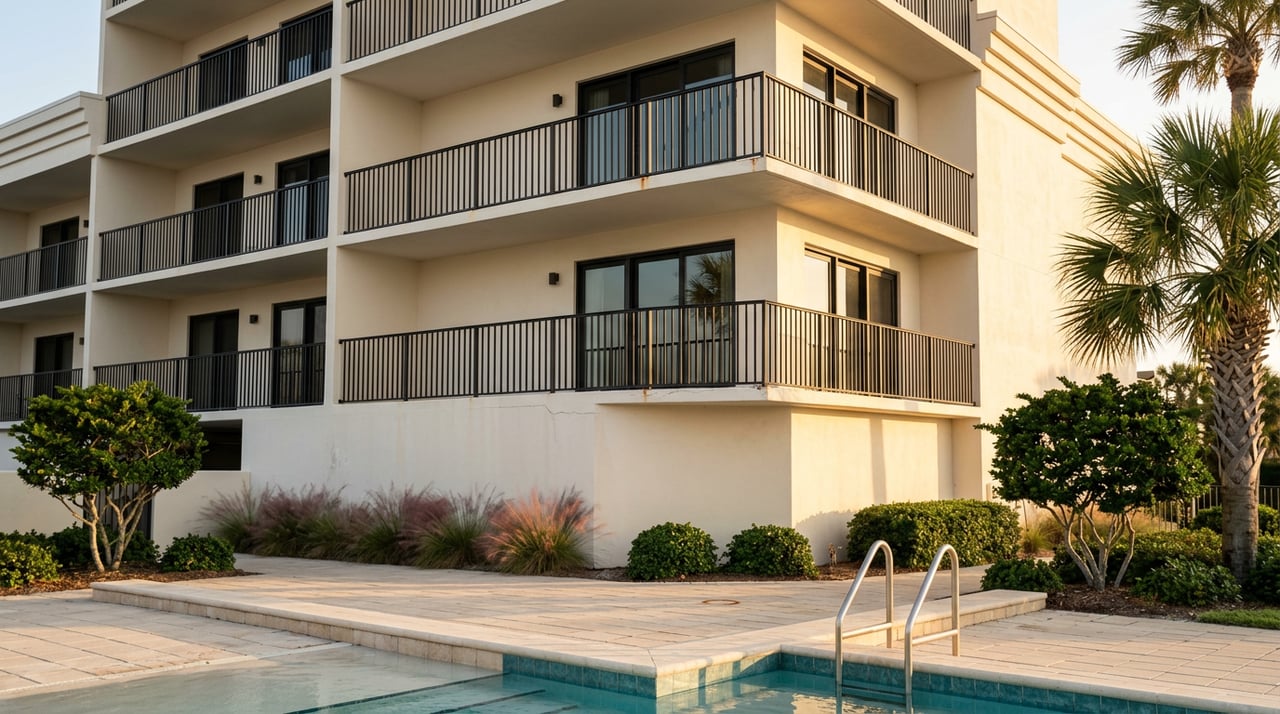
This stretch of Miramar Beach holds a real mix of building types, from three-story courtyard properties like Gulfview I and Gulfview II to taller Gulf-front towers like Empress, the Silver Shells collection of towers, and the Grand Sandestin complex tucked back near Baytowne Wharf. Florida's milestone inspection clock starts at 30 years for most buildings, but local building officials can move that up to 25 years for anything within three miles of the coast, which describes essentially every property on this list. Height and age, not price bracket, decide when a given building faces its first mandatory structural review and reserve reset. A three-story property from the 1990s can hit its clock before a taller, newer tower a half mile down the road.
Under a typical Scenic Gulf Drive association's monthly fee, you're paying for accounting, insurance on the exterior and common areas, maintenance of shared recreational facilities, water, sewer, trash, cable, and internet. Reserves for the structural items the state now mandates sit on top of that, and that's the layer that's changing fastest.
The Documents That Matter More Than the Floor Plan
Before writing an offer on any Miramar Beach condo, ask the listing agent or association for:
- The most recent Structural Integrity Reserve Study and the percentage it's funded against
- The milestone inspection report, and whether it triggered a Phase 2 structural review
- Twelve months of association meeting minutes
- The master insurance declarations page, including named wind and flood deductibles
- Written disclosure of any pending, approved, or recently voted special assessment
Fannie Mae has also shifted its own review standard, moving away from a lighter Limited Review toward requiring a Full Review on most condo loans. That means budget, financial statements, reserve study, delinquency data, and insurance documents all get pulled by the lender, not just requested informally. A building missing any of that paperwork risks landing on a restricted list, which can block conventional financing outright regardless of how strong your own credit looks. You can read the state's own inspection and reserve requirements directly through the Florida DBPR's condominium division before you ever put in an offer.
What the Price Data Is Already Telling You
Zoom out and Walton County looks like a market still very much in demand. Over the three months ending May 2026, home prices countywide were up 27.8 percent year over year, with a median sold price of $748,000. The FRED data series for Walton County put the median listing price at $849,000 for that same month.
That county-wide number leans heavily on single-family sales. Condo-heavy corridors like Miramar Beach carry a cost layer the county median doesn't capture, the reserve funding and insurance line items covered above, and that layer shows up less in the headline price and more in how much room a buyer has to negotiate. A seller in a building still catching up on reserves has more reason to work with you on price, credit a known assessment before closing, or hand over every document you ask for without pushback.
Before You Compare Two Units
A lower fee this month isn't savings if the bill hasn't arrived yet. Ask for the reserve funding percentage before you fall for the view. Ask whether the milestone inspection triggered a Phase 2 review before you fall for the price. The building's paperwork will tell you more about your real monthly cost than anything on the flyer.
Does every condo building in Miramar Beach need a milestone inspection? Any building three stories or taller falls under the requirement once it reaches 30 years old, or 25 years if local officials apply the shorter coastal clock. Given how close most Scenic Gulf Drive and Sandestin towers sit to the water, age matters here as much as height does.
Can I still finance a unit with a pending special assessment? It depends on the building's standing with Fannie Mae and Freddie Mac's project review. Buildings with a completed milestone inspection and adequate reserves generally still qualify for conventional financing. Buildings with open violations, active litigation, or insufficient reserves may be classified non-warrantable, which limits or blocks that path entirely.
If the seller agrees to cover the assessment, am I in the clear? Not automatically. Confirm the exact amount, the payment timeline, and whether the credit satisfies the full obligation before closing. A properly approved special assessment is a binding obligation tied to the unit, and you'll want that in writing rather than assumed.
Every building along this stretch of coast tells a different story in its reserves, and reading that story before you fall in love with a floor plan is the single highest-leverage thing a buyer can do in this market right now. Kim and the team at The Polakoff Group pull the SIRS, the milestone inspection status, and the association financials before you ever write an offer, so the number you're comparing is the real one. If you're weighing two Miramar Beach condos this month, request a white-glove consultation and let's get the documents on the table first.